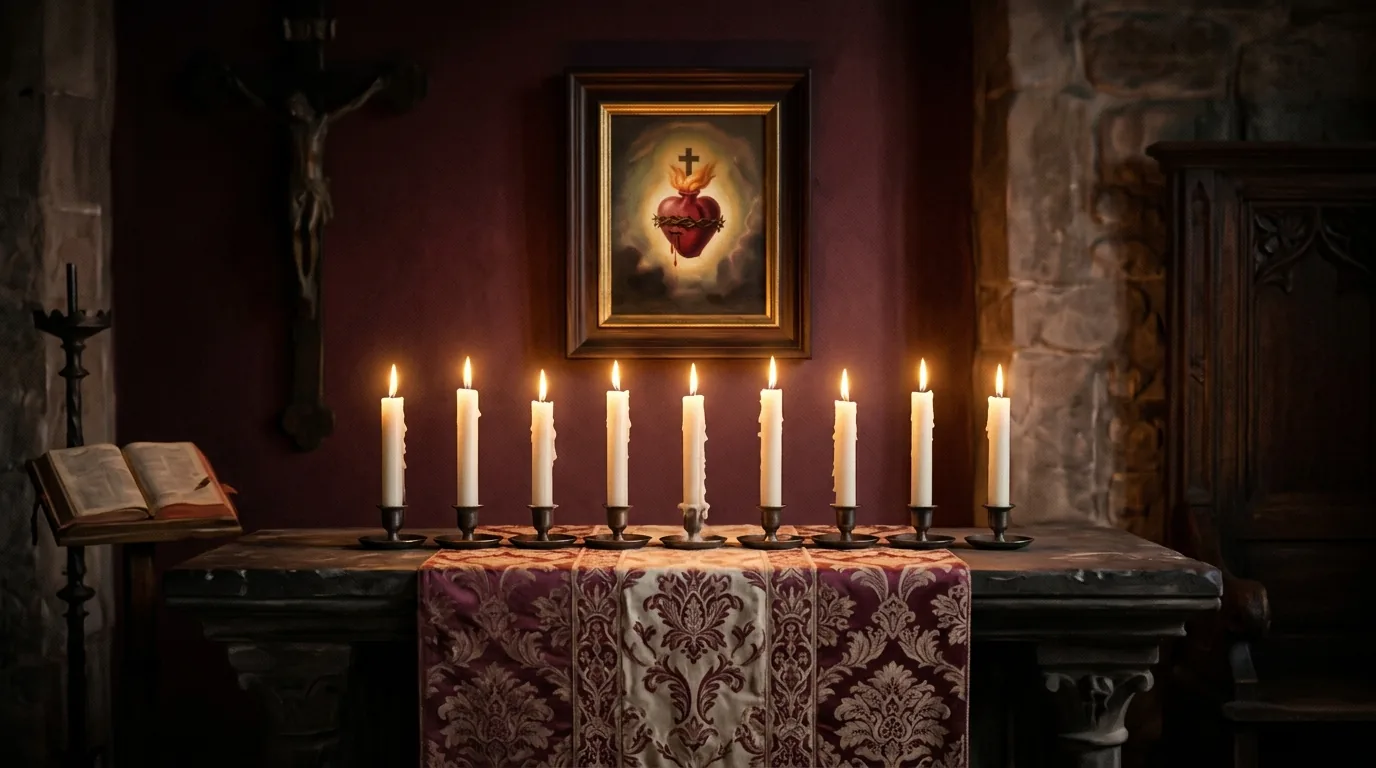
There is a profound, almost heartbreaking vulnerability in the messages Jesus entrusted to Margaret Mary Alacoque. In one of her most striking and intimate visions, Jesus did not appear as a triumphant king demanding submission from His subjects, but rather as a weary lover, grieving the coldness of His people. “He unfolded to me,” she says, “the inexplicable wonders of His pure love, and to what an excess He had carried it for the love of men, from whom He had received only ingratitude.” He spoke of the indifference, the ingratitude, and the sheer busyness that kept humanity from accepting the immense love He was pouring out.
He was, in a deeply mystical sense, lonely for our affection and longing for our return. To heal this divine heartbreak, Jesus did not ask for impossible feats of fasting, grueling physical penances, or massive pilgrimages. He simply asked for time. He requested that the faithful set aside just one day a month—the First Friday—to attend Mass and receive Holy Communion with the specific intention of comforting His Sacred Heart.
He asked for this to be done for nine consecutive months. It was a gentle rhythm, a monthly spiritual reset designed to pull people out of the chaotic, exhausting currents of their daily lives and anchor them back in the warmth of His presence. But Jesus, in His infinite generosity, could not simply ask for a gift without offering a staggering one in return.
He gave Margaret Mary what is now universally known as the "Great Promise." Picture the deep anxieties that plague the human heart—the fear of death, the terror of dying alone, the worry that we die with mortal sins. Jesus shattered those fears with a single, divine guarantee. He promised that anyone who faithfully completed the Nine First Fridays would not die without His grace, nor without receiving the final sacraments.
When Father Jean Croiset, St. Margaret’s spiritual advisor, compiled these writings in 1691, the impact on the Catholic world was immediate and profound. For centuries since, millions of people—from exhausted mothers and factory workers to soldiers on the eve of battle—have marked their calendars, rising early on the first Friday of the month to make their way to a quiet church.
They kneel in the pews, offering their small act of presence, and in return, they walk away carrying the ultimate assurance: that when their final hour comes, they will not be alone. The Sacred Heart will be their refuge.