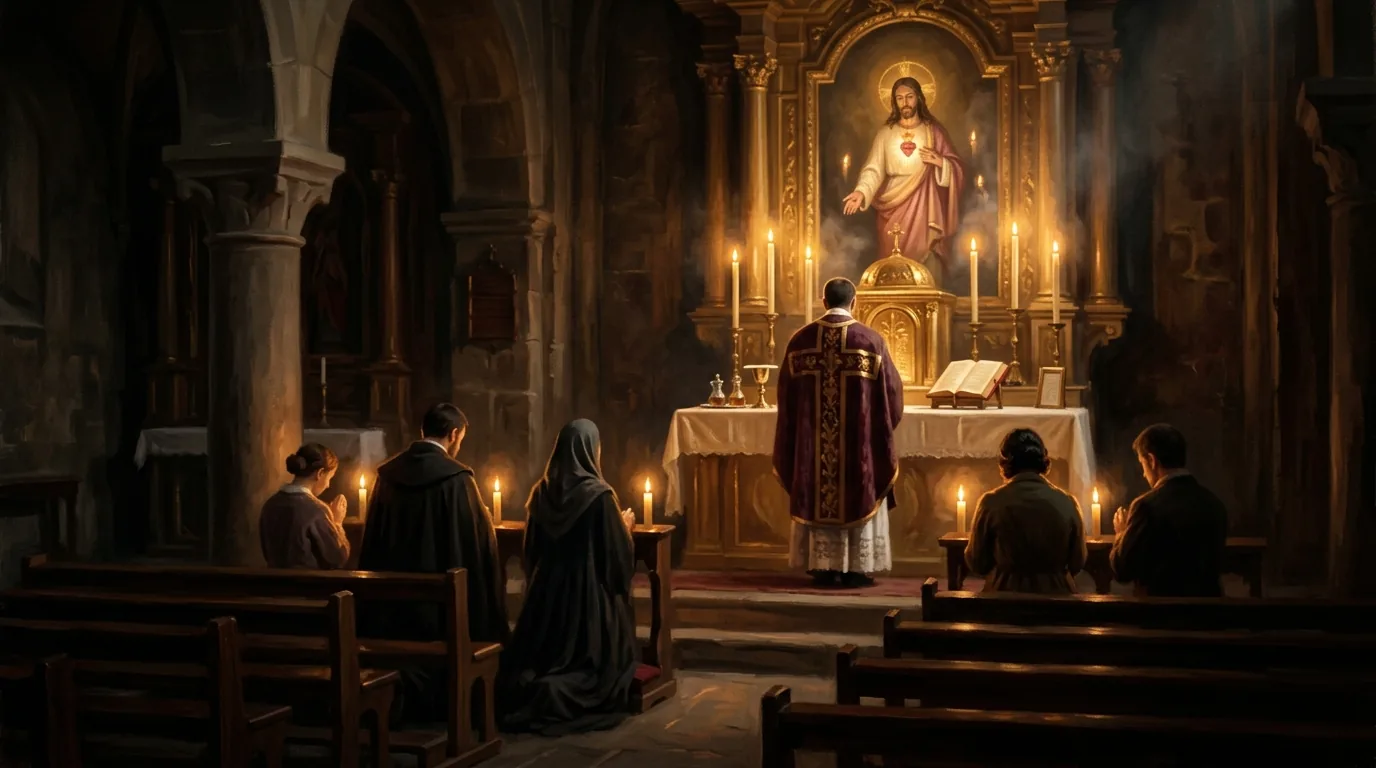
The devotion to the Sacred Heart within the convent of Paray-le-Monial began its public life with nothing more than a simple, hand-drawn pen-and-ink sketch. Because the devotion was still highly contested by a vocal faction of traditionalist nuns who viewed Margaret Mary Alacoque’s visions as an unauthorized and dangerous novelty, she and her devoted novices had to express their piety quietly.
Lacking formal artwork or the approval to commission any, on the morning of July 20, 1685—her name day—the novices decided to surprise their Mistress. In the quiet seclusion of the novitiate, they constructed a humble, makeshift altar, lovingly decorating it with whatever small adornments they could find, and centering it around this modest paper drawing of the Sacred Heart.
Hoping to foster a spirit of unity within the deeply fractured house, Margaret Mary saw an opportunity to bridge the divide. She sent a young novice, Sister Verchère, to invite the older, skeptical nuns to join their private celebration. This gentle gesture of goodwill, however, met a harsh and immediate rebuff. Sister Marie-Madeleine des Escures, the formidable and outspoken leader of the traditionalist faction, intercepted the invitation with a cold, dismissive response: "Go say to your mistress that the best devotion is the practice of our Rules and Constitutions." When the embarrassed and disheartened novice returned with the rejection, Margaret Mary remained entirely unfazed by the sting of the rebuke.
"Say, rather," she quickly responded with a calm certainty, "that they will not come. But the Sacred Heart will force them to render it homage." Alluding directly to the fierce opposition of Sister Marie-Madeleine, she confidently predicted: "There are some now opposed to it, but the time will come when they will be the first to forward the devotion." The miraculous fulfillment of this prophecy would come from an unexpected source miles away in Semur, rooted in seeds that had been quietly planted the previous year.
Mother Greyfié—the famously strict, uncompromising, and often skeptical former Superior of Paray—had actually begun to experience a profound change of heart back in 1684. After reading the published retreat notes of St. Claude de la Colombière, which strongly validated Margaret Mary's mystical visions, and receiving a persuasive letter from Margaret Mary herself, Greyfié’s lingering doubts completely vanished.
She underwent a deep spiritual conversion, ultimately consecrating her Semur community to the Sacred Heart and commissioning a beautiful miniature oil painting of the image. For Christmas in 1685, Mother Greyfié sent a copy of this commissioned oil painting back to Margaret Mary. The painting's arrival, accompanied by the shocking news that the notoriously strict former Superior was now a devoted champion of the Sacred Heart, sent ripples of astonishment through Paray.
Sister Marie-Madeleine was profoundly struck by this revelation. She reasoned that if a woman who championed the strict adherence to the rules above all else had embraced this image, the devotion must be entirely genuine and divinely inspired. Her stubborn resistance finally broken, Sister Marie-Madeleine fulfilled Margaret Mary's exact prediction.
On the Friday after the Octave of Corpus Christi in 1686, she eagerly helped arrange for Mother Greyfié’s painting to be placed prominently on the main choir altar. As the two formerly divided factions of the convent finally united in joyous adoration, Sister Marie-Madeleine warmly embraced Margaret Mary, shedding tears of reconciliation and healing the bitter rift at last.