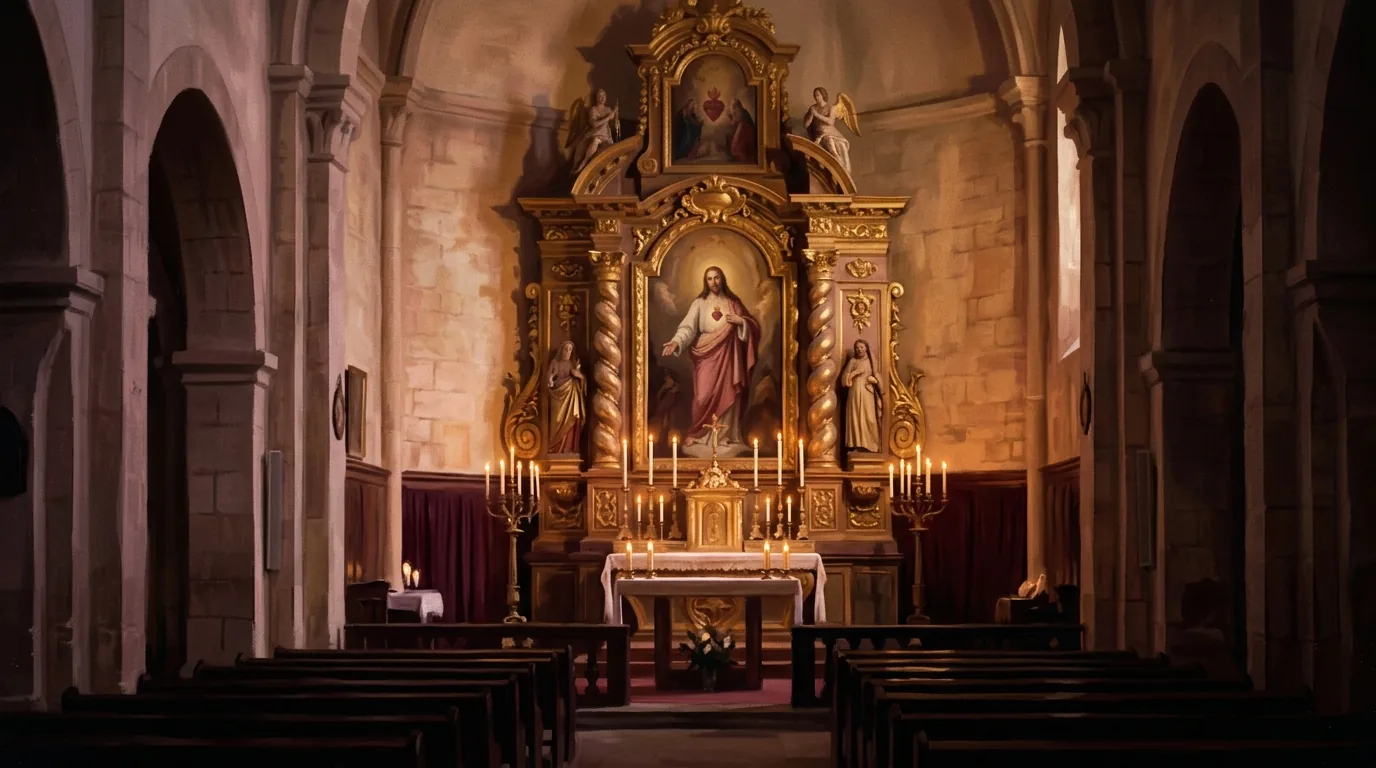
The Visitation Order, founded decades earlier by St. Francis de Sales and St. Jane Frances de Chantal, was designed to be a gentle order. It did not demand the severe physical austerities of the Carmelites or the Poor Clares, making it accessible to women of delicate health. Instead, it demanded something often much harder: the absolute surrender of the will.
The sisters lived a life of strict enclosure, hidden from the eyes of the world. Their days were woven with silence, communal prayer, simple labor, and an overarching spirit of humility. For a young woman in her mid-twenties, this meant a complete stripping away of the ego. As a novice, St. Margaret’s vocation was tested. She was required to perform menial tasks, to obey without question, and to embrace the poverty of the order.
On November 6, 1672, she knelt before the altar and pronounced her final vows, binding herself permanently to the cloister. Imagine the atmosphere of that 17th-century convent. The stone floors were cold; the meals were simple; the silence was heavy, broken only by the chanting of the Psalms and the rustle of wool habits. To the outside observer, it might have seemed a wasted life, buried behind high stone walls.
But in the spiritual economy, this hiddenness is exactly where the greatest dramas unfold. The silence of the Visitation was the canvas upon which Christ was about to paint a masterpiece of divine love. Her early years of suffering under her relatives had already taught her how to endure hardship with patience, preparing her for the extraordinary and demanding graces she was about to receive.